
Pricing
Payment Processing & Pricing Strategies
From traditional pricing to cash discounting and dual pricing, Denelope helps businesses evaluate their options and choose a payment strategy that fits their operations.
Understanding Your Payment Processing Options
For many businesses, credit card processing is one of the largest operating expenses outside of payroll, inventory, rent, and utilities. As card usage continues to increase, business owners are looking for practical ways to manage processing expenses while maintaining a positive customer experience.
There is no single pricing model that works for every business. The right approach depends on your industry, average transaction size, customer demographics, competitive environment, and operational goals.
Denelope, LLC helps businesses evaluate payment processing strategies, compare pricing structures, and determine which solution best aligns with their operations.
Compare Pricing Models
No single payment processing strategy works for every business. Understanding the differences between traditional pricing, cash discounting, and dual pricing can help determine which approach best fits your customers and operational goals.
Traditional Pricing
The business absorbs all payment processing costs, and customers pay the same price regardless of payment method.
Best For:
- Business prioritizing simplicity
- Service-based businesses
- Businesses with lower processing volume
Cash Discounting
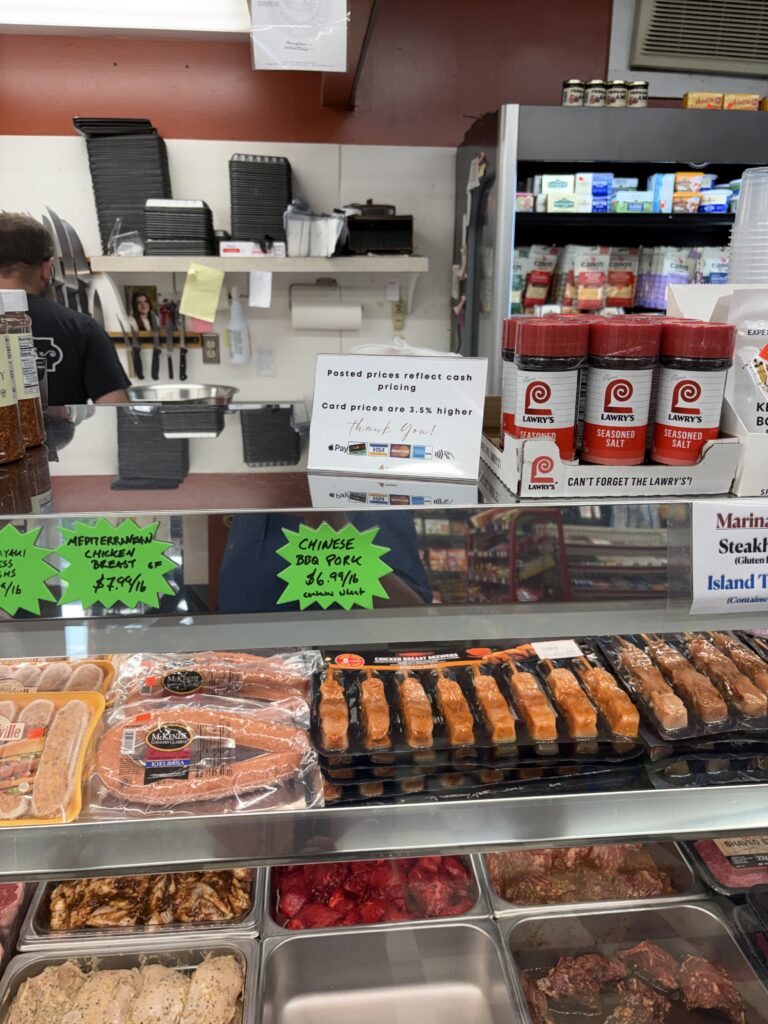
Posted prices reflect the cash price. Customers who pay with a card pay a higher disclosed card price.
Best For:
- Retail Stores
- Convenience Stores
- Automotive Repair Shops
- Businesses looking to reduce processing expenses
Dual Pricing
Both cash and card prices are displayed before purchase, giving customers clear visibility into pricing options.
Best For:
- Businesses focused on transparency
- Retail and restaurant environments
- Businesses wanting clear customer disclosure
Benefits
Why Transparency Matters
The most successful pricing programs are built on clear communication, customer awareness, and proper implementation.
Common Misconceptions about Debit Cards
Many business owners have questions about debit cards, dual pricing, cash discounting, and compliance. Here are a few of the most common.
Can Debit cards be priced differently from cash transactions?
One of the most common misconceptions about cash discounting and dual pricing is that debit cards cannot result in a higher card price than cash. The key distinction is how the pricing structure is established and disclosed before the transaction occurs.
Is dual pricing the same as a surcharge?
NO. In a properly disclosed dual pricing model, customers choose between a cash price and a card price before payment. The card price is not added as a separate surcharge at checkout. Instead, customers select the disclosed card price before completing the transaction.
Can debit cards be surcharged?
NO. Card network rules prohibit adding a separate surcharge to debit card transactions. This is one reason proper system configuration and pricing disclosure are important.
What about EBT transactions?
EBT purchases should remain exempt from cash discounting adjustments, dual pricing adjustments, service fees, and surcharges. EBT transactions must be processed according to applicable program requirements.
Why does disclosure matter?
Customers should understand pricing before making a payment decision. Clear signage, accurate receipts, proper system setup, and consistent staff communication help create transparency and maintain customer trust.
How do I know which pricing model is right for my business?
The answer depends on your industry, average transaction size, customer demographics, competitive environment, and operational goals. Denelope helps business owners evaluate options and determine which approach best fits their operation.
Choosing the Right Approach
There is no one-size-fits-all pricing strategy. The right approach depends on your business, customers, operational needs, and long-term goals.
Business Factors
The right pricing model depends on your industry, customers, and payment habits.
- Industry type
- Average transaction size
- Customer demographics
- Card-to-cash payment mix
Operational Needs
Successful implementation requires the right systems, communication, and execution.
- Existing POS capabilities
- Staff training requirements
- Pricing display methods
- Customer communication
Long-Term Goals
The best strategy balances profitability, customer experience, and sustainability.
- Profitability
- Customer experience
- Operational effeciency
- Business growth
A convenience store may require a different approach than a restaurant, retail business, automotive repair facility, professional service provider, or specialty retailer. The goal is not simply to reduce fees. The goal is to identify a pricing strategy that supports long-term business success.
Technology and Processing Partners
Denelope works with trusted payment and technology providers to help businesses evaluate processing solutions, POS systems, and operational tools.